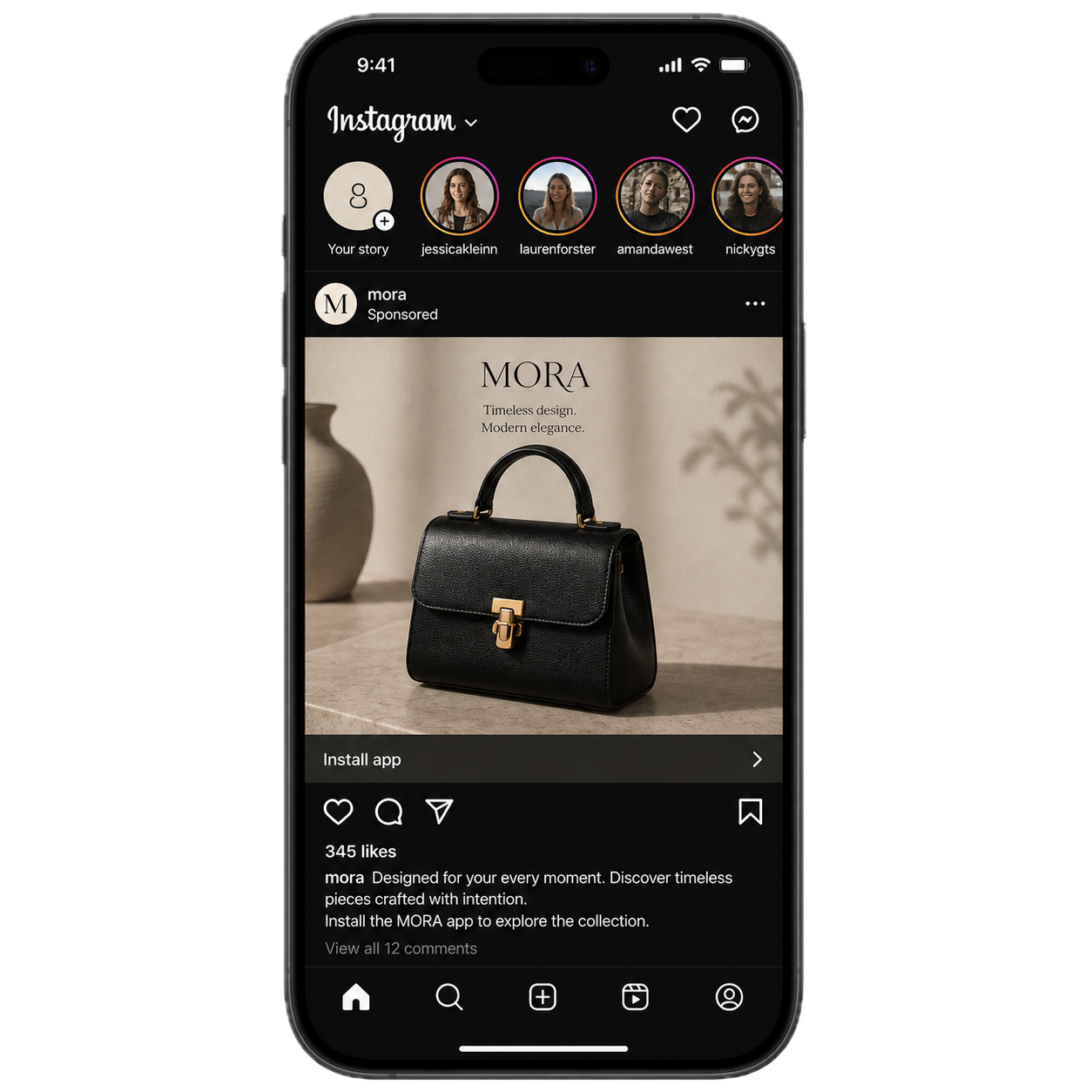
01
2.8×
higher conversion when a paid ad lands in your app, not your mobile site.
Source · Google, Web-to-App Connect
Every morning, your customers pick up their phone before they open a laptop.
UK adults now spend most of their online time on smartphones and use 41 apps a month.
Not websites. Apps.
The brands they open without thinking are the ones sitting on the home screen.
Some Shopify brands have turned that home screen into their single biggest revenue channel.
This is what they found.
Up to 63 %
of online revenue from the app, at top-performing brands.
Source · Pharmazone 63%, BWH Plant Co 56%, Junior Couture 50%
Public brand cases · best-in-class
Up to 15 ×
more revenue per customer in the app, at top-performing brands.
Source · Country Life 15×, Pharmazone 15×, John Varvatos 10×
Public brand cases · best-in-class
£1.00M
£1.00M
£1.40M
today
with an app
Strong-execution band at +40%. Public brand cases include +35% AOV (BWH Plant Co), +37% AOV (The Oodie), +30% AOV (Vosges). Peer-reviewed academic floor is +24% (van Heerde et al.). Real outcomes vary by category, install motion and lifecycle execution.
It is the same customer on either surface.
An app outperforms a mobile site in five places.
2.8×
higher conversion when a paid ad lands in your app, not your mobile site.
Source · Google, Web-to-App Connect
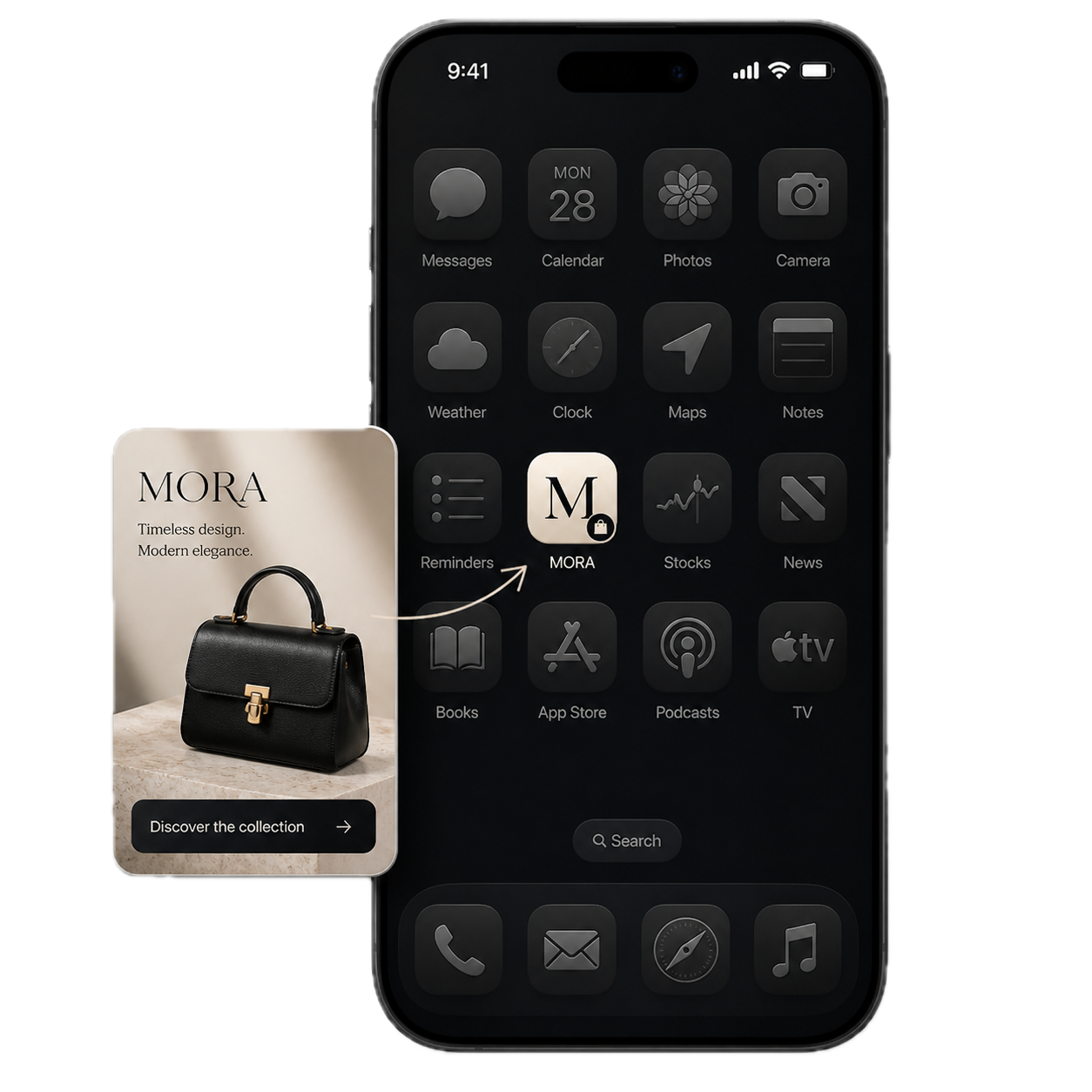
6.4×
longer time spent in your app than on your mobile site, per visit.
Source · industry benchmark
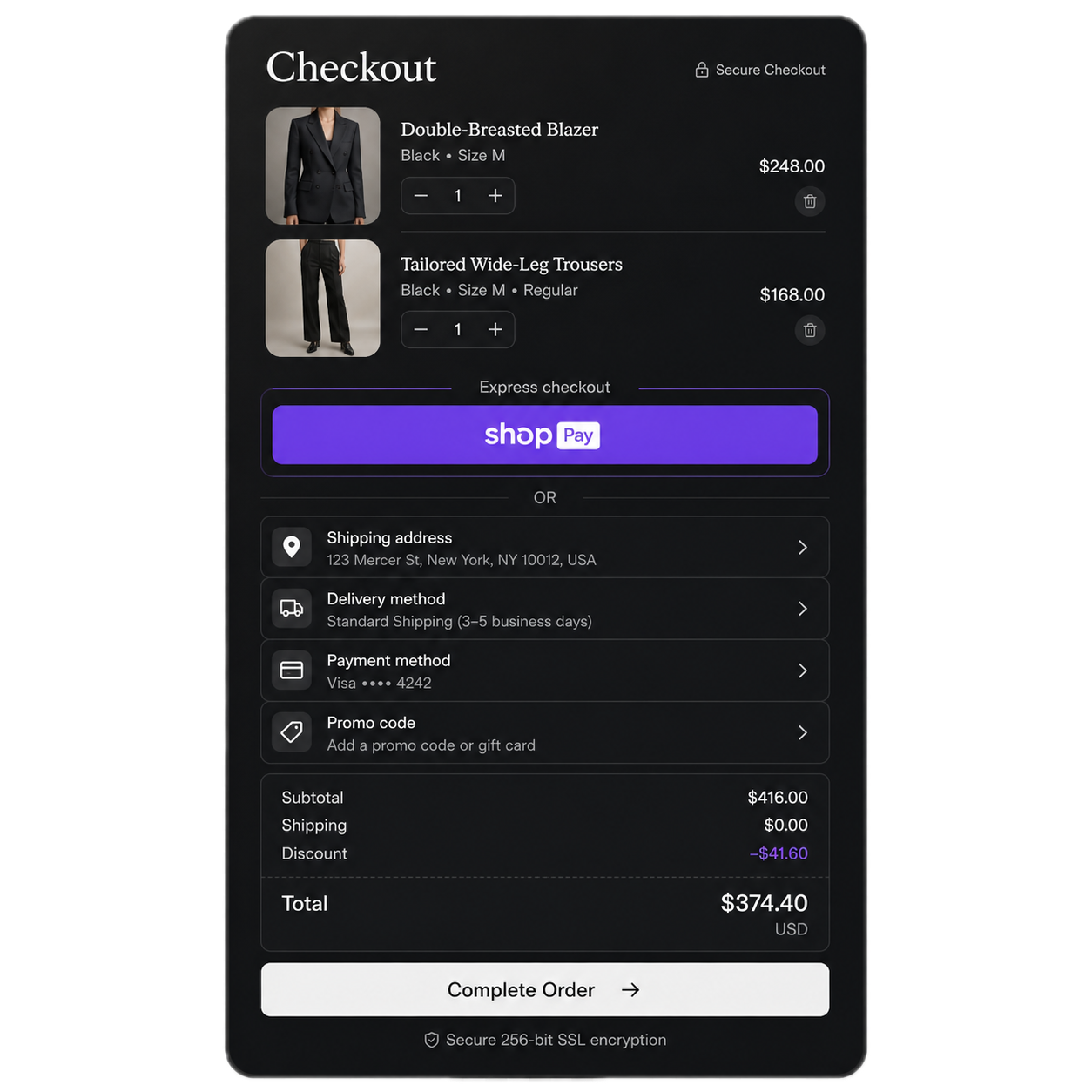
+45%
higher checkout conversion in your app than in a mobile browser.
Source · Google
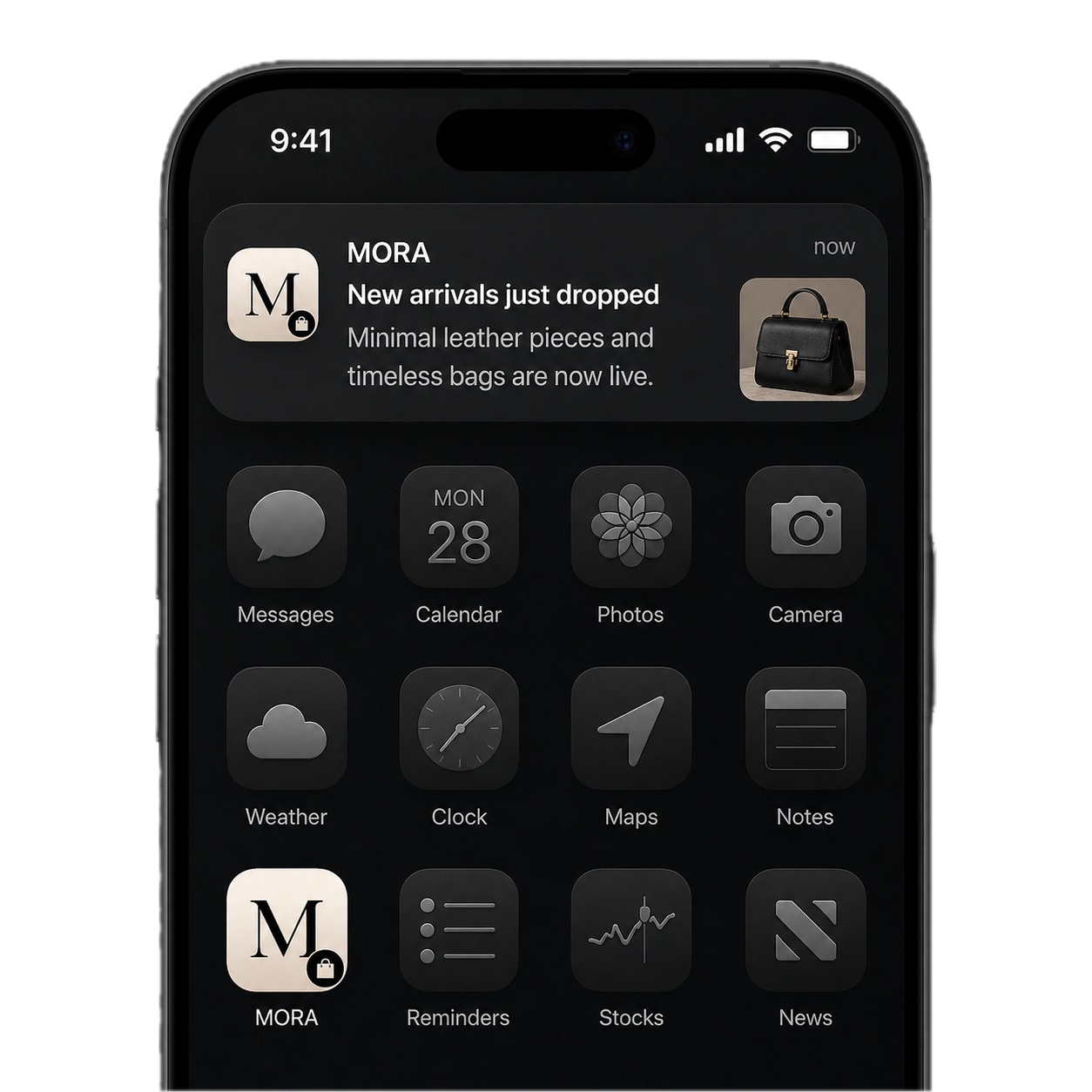
+191%
more customer engagement once you start sending notifications.
Source · notification benchmark
3×
higher repeat-purchase rate among customers opted in to drops on their phone.
Source · retention research
You wouldn't be the first.
Brands like yours already built one.
Friday, May 1
9:41
Just dropped: Atelier
Your size in the new collection.
Back in stock
Linen blazer · oat · size M.
Still in your bag
Two items waiting. Free shipping today.
Notifications drive up to 127% more purchases than ads, email, or SMS.
Your competitors send them. You need an app to send your own.
Volcom measured how often a notification on the phone actually moved a purchase, against the three channels they were already paying for.
Source · Volcom case study
Three more brands. Three different shapes of impact.

Revenue surged 8× in two hours after a drop launch sent through the app.
Source · Patta case study

Reported 37× ROI from app notifications.
Source · Beekman 1802 case study

3× the click-through of an equivalent email.
Source · AWG Mode case study
You don't need to trust us.
Fifty brands published their numbers.
None come from us. Every number is published by the brand or its app vendor.

Plant subscription
56%
of online DTC revenue.
+35% AOV · 97% retention

Pharmacy retail
63%
of online revenue.
15× revenue per user vs website

Menswear DTC
60%
of DTC business in month one.
2.5× conversion rate

Premium childrenswear
50%
of peak revenue from 5% of users.

Performance apparel
40%
of all Black Friday and Cyber Monday sales.

Skincare DTC
40%
of DTC sales through the app.

K-beauty retail
35%
of online revenue from 30% of users.

Premium occasionwear
10×
revenue per user.
18% of online revenue · 8.3× conversion

Lifestyle apparel
10%
of BFCM revenue.

UK pet retail
10%
of total revenue.

Natural foods
15×
revenue per user.
2.4× conversion rate

Designer menswear
10×
revenue per user.

Performance accessories
3×
revenue per user.
+30% AOV

Fashion DTC
+204%
revenue per session.

Rental marketplace
+600%
sales after launching the app.

Streetwear
+53%
sales in month one.
+43% in month two

Lifestyle apparel
+135%
conversion rate.
+37% AOV · +193% GMV per session

Marketplace
20×
app conversion vs web.
+126% checkouts via deep links

Sports nutrition
4.5×
conversion vs mobile web.

Sports nutrition
3.8×
conversion after launch.

Indian apparel
3.5×
conversion after launch.

Outdoor apparel
3.5×
conversion after launch.

Tea retail
3.4×
conversion.
4.6× AOV per session

Womenswear DTC
3×
conversion via personalised flow.

STEM apparel
3×
conversion after launch.

Indian ethnic wear
2.5×
conversion after launch.

Spiritual jewellery
+50%
conversion.
+25% AOV · +30% signups

Indian apparel
+50%
conversion after launch.

Medical apparel
2×
conversion.
+45% signups

Baby gear
2×
conversion after launch.

Skate apparel
2×
conversion after launch.

Indian fashion
1.8×
conversion after launch.

Wellness DTC
+100%
conversion vs mobile web.
+15% AOV

Dutch department store
2×
conversion via deep links.
+48% AOV · +68% ROAS

Fast fashion
+75%
ROI via Web-to-App Connect.

Streetwear
7.5×
orders per session.

Activewear
+20%
AOV through the app.

Premium chocolate
+30%
AOV in-app.

Travel goods
+19%
spend among app users.

Fashion DTC
414×
return on app spend.
98.4% in-app retention

Travel apparel
5×
lifetime value.
3× conversion rate

Streetwear
5×
lifetime value after launch.

Footwear
4×
retention.
3.5× conversion

Beverage DTC
+20%
lifetime value.

Christian apparel
75%
repeat customer rate.

Wristband apparel
40%
repeat customer rate.

Action sports
+127%
conversion vs ads, from one notification.
+125% vs email · +21% vs SMS
Streetwear
8×
revenue in two hours.
from one notification

Indian fashion
3×
click-through vs email.
from notifications
Beauty and skincare
37×
ROI from notifications.
If most of these are true, build the app. If not, fix those things first.
Mobile-heavy traffic.
Most of your sessions are already on a phone. The app extends a reality you have, not a hypothetical one.
Repeat customers drive revenue.
Replenishment, gifting, loyalty, drops. The second order matters more than the first.
You can promote installs.
Email, SMS, paid social, post-purchase placements you actually use.
Your catalogue changes often.
Drops, restocks, seasonal edits, new collections. Reasons for customers to keep opening.
You'll run lifecycle properly.
Notifications, segmentation, and follow-ups treated as a real channel, not a vanity badge.
If most of these are true of your store, an app will pay back fast.
Here is what the evidence does say.
Where merchants like you have actually landed.
10–20%
A real revenue line from your most loyal customers. Useful from launch.
PetShop.co.uk · 10% of total revenue
Tadashi Shoji · 18% of online revenue
Aviator Nation · 10% of BFCM
30–40%
What brands see when they invest in install promotion and lifecycle notifications.
Kiokii · 35% of online revenue
Minimalist · 40% of DTC sales
LSKD · 40% of BFCM sales
50%+
Your best customers, mostly shopping in-app.
BWH Plant Co · 56% of online DTC
Pharmazone · 63% of online revenue
Junior Couture · 50% of peak from 5% of users
These build over months.
Apps don't hit these bands on launch day. Most brands above took six to twelve months to reach the numbers they published.
Not all of this is new revenue.
Some is channel shift from your website. The peer-reviewed +24% lift is the cleanest measure of pure incremental gain.
Category fit matters.
Apps pay back fastest in mobile-heavy, repeat-purchase categories. Without that fit, the lower band is the realistic outcome.
That is the honest spread. Not a promise. The realistic shape of what the evidence actually supports.
It's slower compounding.
What you don't build, you keep paying for.
When Shopee routed installed users into the app instead of mobile web, the share of revenue running through the app more than doubled in twelve months.
20×
higher in-app conversion than the mobile site.
+126%
increase in checkouts after the deep-link integration.
The business won't fail tomorrow.
The gap widens quietly. Not all at once.
Send us a link to your store. We'll come back in 48 hours with what we'd build, what it costs, and when you launch.
From Talmee · Manchester · 2026


